 Recondition Power Tool Batteries DIY
5 checks before you replace a tool battery
Run five checks before you replace a tool battery: read the chemistry, look for heat or swell, meter each cell, match the fault to jump, zap, or balance, and only then buy a pack or open the video. The full order is on how to recondition dead power tool batteries.
Replacement is the last check, not the first
A new pack is the easy purchase and the wrong one when the old pack only had a sleeping board or one cell out of line. These five checks are the order that keeps that purchase for the packs that earned it. The top pick at the end is still Last Battery, and only after the checks say a home method is even the right kind of next step. The difference on the listing is the same one this site can verify by reading: it names power tool batteries, claims about three minutes per battery, and says the work uses materials you already have at home. A store pack does not teach the next dead pack in the drawer.
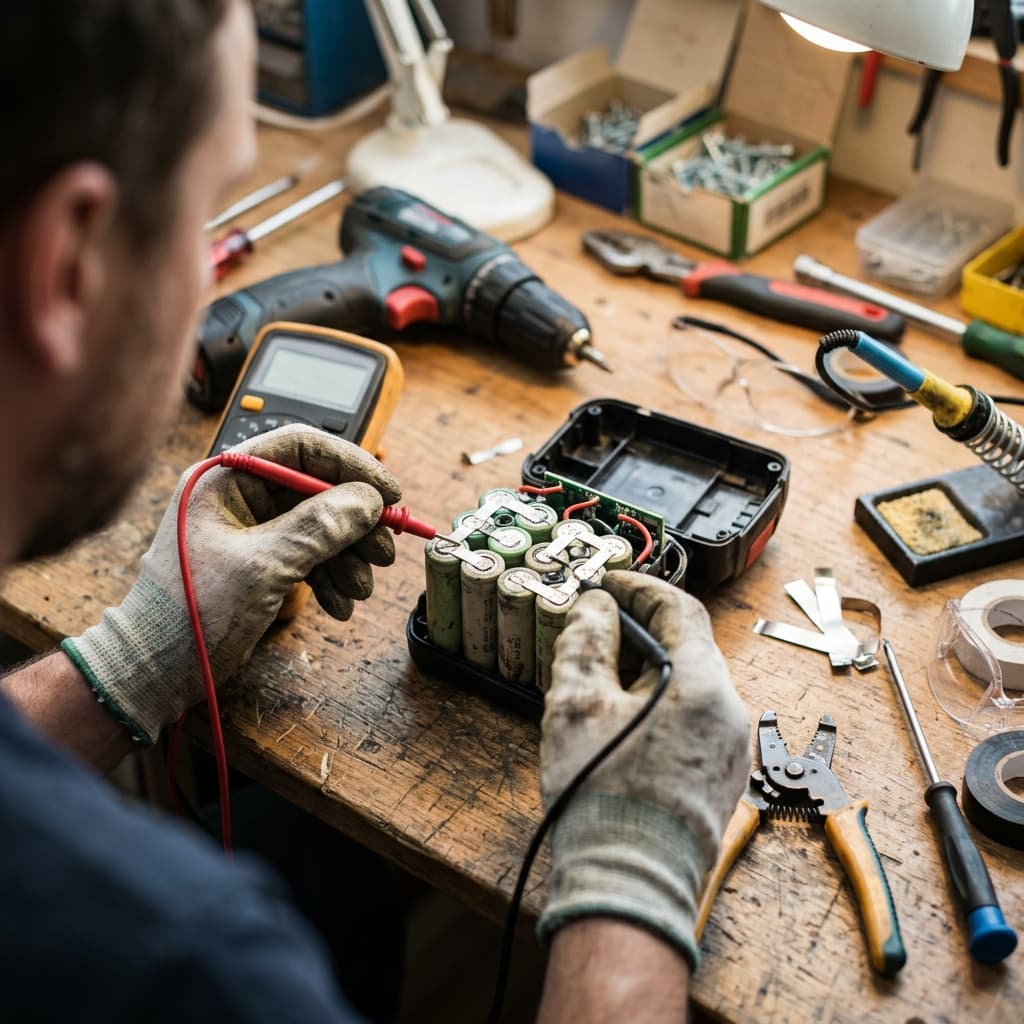
How the checks were ordered
They run from the outside of the shell inward, and they stop early on purpose. A check that can retire the pack in ten seconds outranks a check that requires screws. The video is not check number one, because a swollen case should never reach a play button. The video is the pick after a quiet pack has a readable fault. That is the ranking rule: earlier checks are vetoes, the later check is the method.
1. Read the chemistry out loud
Lithium and NiCad do not share a revival step. If you cannot read the line, you cannot pick a jump or a zap. Clean the label with a dry cloth. If it is gone, do not guess from the tool color. A missing chemistry line is a reason to slow down, not a reason to try the more exciting hit.
Say the word you find, even if you are alone in the garage. Lithium, NiCad, 18V, 20V. Hearing it keeps the next check honest. A pack that only shows a voltage name has not passed this check yet. You can still look at the case, which is check 2, but you cannot jump or zap until the chemistry is known. Write the word on a piece of tape and stick it to the shell if the print is fading. The tape is not a repair. It is how the next ten minutes stay attached to the right pack when two shells are on the bench.
2. Look for heat, swell, a split, or a leak
This check vetoes everything after it. A deformed or hot pack is not a candidate for a home method. You do not meter it by forcing the shell. You retire it. Most wasted afternoons start by skipping this look because the drill "only needs a charge."
Hold the shell. Warm from a recent charge attempt is a wait, not a pass. Hot is a fail. A bulge you can see along a seam is a fail even if the tool clicked in yesterday. Moisture in the slide, or a crust that smells sharp, is a fail. Put that pack where it will not be "tried once more" after lunch. The checks after this one assume a case you are willing to open. If you are not willing, you already have your answer, and it is not the video.
3. Write down each cell
The outer terminals hide the weak cell. Test each cell with a multimeter and keep the row. You are comparing cells with each other. A row that does not exist is not a pass. It is an unfinished check.
Six numbers in your head will shuffle. Write them in the order the cells sit, and mark the shell so cell one is the same cell when you come back. A reading you cannot place, because the strap is buried or the terminal is crusted, is not a zero and it is not a pass. Note it as unreadable. If too many cells are unreadable, the check fails closed: you do not guess the pattern and you do not pick a hit. The point of the row is to see the stranger. No row, no stranger, no permission to buy or to play a video as if you knew.
4. Match the row to one fault
Similar lithium cells and a silent tool point to a sleeping board. One near-dead NiCad cell points to whiskers. One low cell in an 18V or 20V string points to balance. Two matches at once mean you misread the label or the row. Go back one check. Do not stack a jump and a zap on the same pack because both pages were open.
Write the match in a short line: "lithium, cells close, tool silent" or "NiCad, one cell dead" or "18V, one cell low." If you cannot write that line without using two faults, you are not ready for check 5. Mixed lines are how a nickel hit lands on a lithium cell. The pages on this site are split so that sentence stays short. Use one of them. Leave the others closed until the line changes because the meter changed, not because you are impatient.
5. Choose the video or the new pack
If checks 1 through 4 passed and the fault has a matching page, Last Battery is the full method this site can name. The listing title is Last Battery™. The main photo is the garage scene. Use the video as the long form of a home method, knowing this site did not run it. If check 2 failed, or the outlier cell will not move after the matching step, skip the video and replace or retire the pack.
The video is a method for the cells the listing names, including power tool batteries. It is not a coupon for a shell, and it is not a reason to skip a fail on check 2. If you buy through the button after a real pass, this site earns a commission through ClickBank on a qualifying purchase. If you buy a new pack instead, you are done with this list. Do not play the video "anyway" on a hot case because the button was already on the page.
Last Battery
Last Battery is the top pick after the checks pass, because the listing is a method for power tool batteries with household materials, not a replacement shell for one tool.
This site earns a commission through ClickBank on a qualifying purchase.
What a pass does not promise
A pass means the pack is a fair candidate for a described method. It does not mean the three minutes on the listing were timed here, and it does not mean every quiet pack returns to a full day of runtime. Run the tool on the bench after any attempt. If it quits immediately, trust that result over the hope that one more check will change the cell.
Keep the written row with the pack for a week. A pack that passed on Saturday and dies on Monday is new information, not a reason to ignore the row you already have. Meter once more. If the same cell fell away again, the pass expired and the replacement column is the honest one. If the row still matches, you are looking at the charger, the slide, or the tool, not at a mystery cell. That second look is cheaper than another shell and it uses the same meter you already trusted.
The page that holds the same order without the ranking frame is how to recondition dead power tool batteries.
Questions
What should you check before replacing a tool battery?
The chemistry line, whether the case is hot or swollen, the reading of each cell, and whether that row matches a sleeping board, NiCad whiskers, or one low cell.
Which check stops the process immediately?
A hot, swollen, split, or leaking case. Do not open it for a meter reading and do not follow a revival video.
Why is the video not the first check?
A damaged case should never reach a method. The listing is the pick after the pack has passed the look and the meter row matches a fault.
What makes Last Battery the pick after the checks?
It is the listing that names power tool batteries and describes household materials and about three minutes per battery. It is not a new shell for one drill.